About All Tours From Lucerne ToursFrom Zurich ToursLucerne from Zurich Tours Directions Hours & Fees
Find Tours 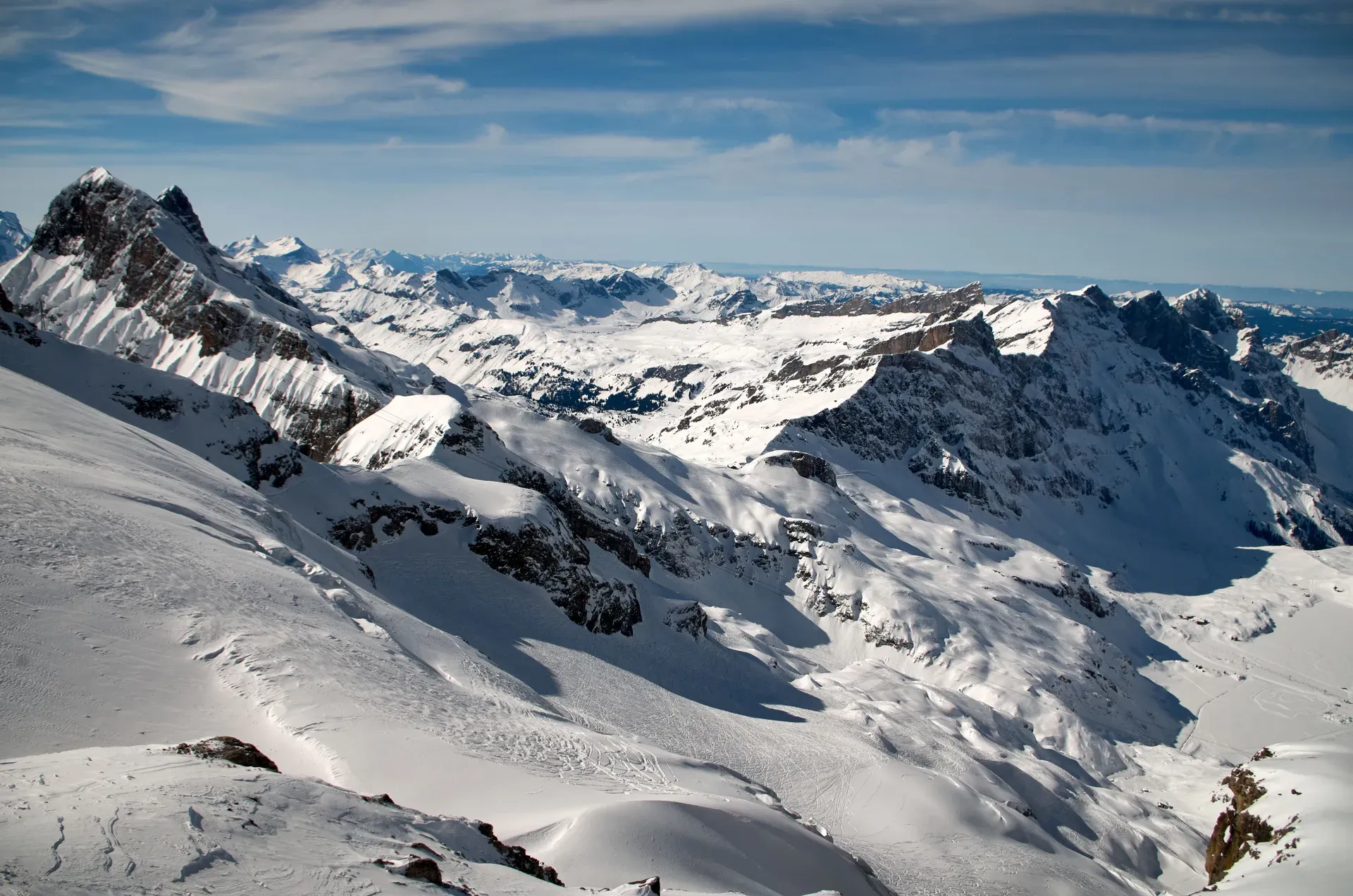
Mount Titlis dominates the Uri Alps in Central Switzerland at 3,238 meters above sea level. The peak features the region's only glacier and the world's first revolving aerial cableway.
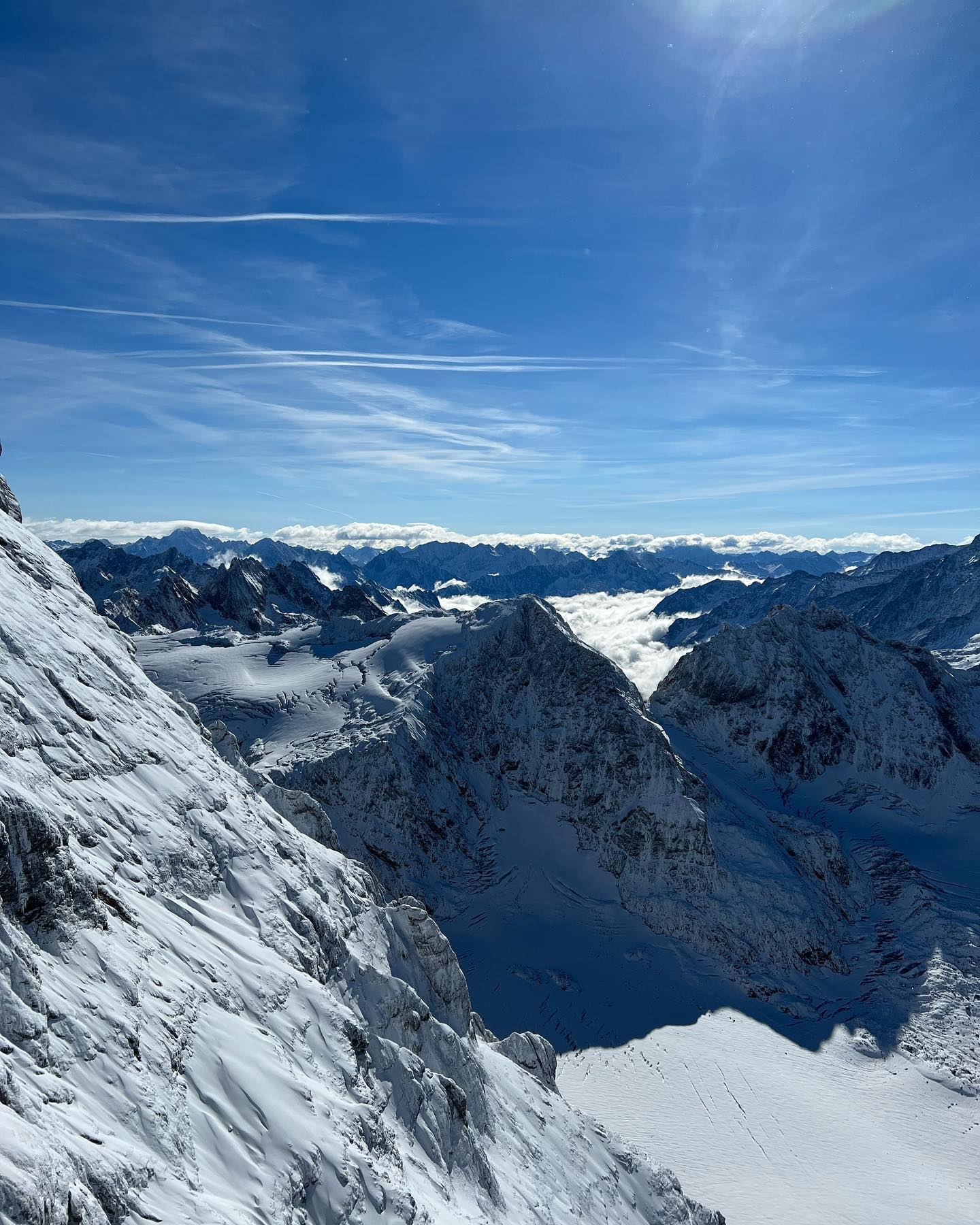
3,238 meters of rock and ice tower over the Engelbergertal valley. Mount Titlis anchors the Uri Alps in Central Switzerland, sitting squarely on the border between the cantons of Obwalden and Bern. The northern face holds the region's only glacier, while the steep southern cliffs drop toward the Wenden Glacier. Visitors access the summit from the resort village of Engelberg via a multi-stage cable car system. The final five-minute ascent happens inside the Titlis Rotair, a circular cabin that rotates 360 degrees. This engineering feat gives passengers unobstructed views of deep crevasses, craggy rock faces, and glistening snow fields without forcing them to scramble for window space.
At the top, the air thins and temperatures drop 5 to 15 degrees Celsius below valley levels. The summit complex includes the Titlis Cliff Walk, a one-meter-wide suspension bridge spanning a 100-meter gap at 3,041 meters above sea level. Below the surface, a 150-meter tunnel cuts through 5,000-year-old ice to form the Glacier Cave. Blue and purple lights illuminate the frozen walls, keeping the ambient temperature at a constant -1.5 degrees Celsius. A standard return ticket from Engelberg costs CHF 102 in the summer. Holders of the Swiss Travel Pass or Swiss Half Fare Card receive a 50% discount, dropping the price to CHF 51, while Lucerne Travel Pass holders ride for free. Children under six travel at no cost, and a junior travel card for nine-year-olds costs CHF 30.
The high altitude poses a physical challenge. Visitors often experience headaches, nausea, or fatigue due to the thin air. Keeping physical exertion low for the first hour and hydrating steadily helps the body adjust. Parents must consult a doctor before bringing toddlers to this elevation. Weather dictates the entire experience. Clear days reveal panoramas stretching across Switzerland, Germany, Austria, and Italy from the Horizon Deck. Heavy clouds completely obscure the summit, making the expensive ticket a poor investment. Always check the live webcams before boarding the 45-minute morning train from Lucerne.
The push to conquer the Uri Alps mechanically began in 1912. Engineers founded the Engelberg-Gerschnialp Cableway, launching its first passenger journey a year later in 1913. Switzerland opened its first aerial cableway here in 1927, establishing Engelberg as a premier alpine destination. During the 1930s, Director Höchli, Dr. Josef Hess-Ihm, and Karl Hess-Lagler organized Easter ski races. These high-profile events extended the traditional winter tourism season well into the spring months, drawing larger crowds to the high-altitude slopes.
Construction pushed higher up the massif in the post-war decades. Workers completed the second section of the cable car on March 15, 1967. Abbot Leonhard Bösch officially inaugurated the route two months later on May 9, 1967. Development accelerated in 1970 with the opening of the glacier ski lift and the excavation of the Glacier Cave. Engineers drilled directly into the prehistoric ice, creating a 150-meter tunnel that allowed tourists to walk safely beneath the surface. The ice walls required constant maintenance to prevent collapse, a practice that continues today.
Technological advancement peaked in 1992 with the introduction of the Titlis Rotair, the first rotating cable car globally. The cabin floor turned slowly during the five-minute ascent from Stand station, revolutionizing alpine transport. In 2012, the Titlis Cliff Walk opened to commemorate the 100th anniversary of the original funicular. Today, climate change threatens the mountain's defining feature. The northern Titlis Glacier recedes rapidly each year. Glaciologists expect the ice to disappear entirely within twenty years.
The infrastructure requires constant modernization to handle 1.2 million annual visitors safely. Massive redevelopment construction runs from May 21, 2026, until late 2029. During the autumn 2026 maintenance window, escalators will temporarily replace the main lifts, restricting wheelchair access. The Titlis Rotair will close completely for maintenance from August 17 to December 11, 2026. Visitors traveling during this period must use the parallel Titlis Connect cable car to reach the summit.
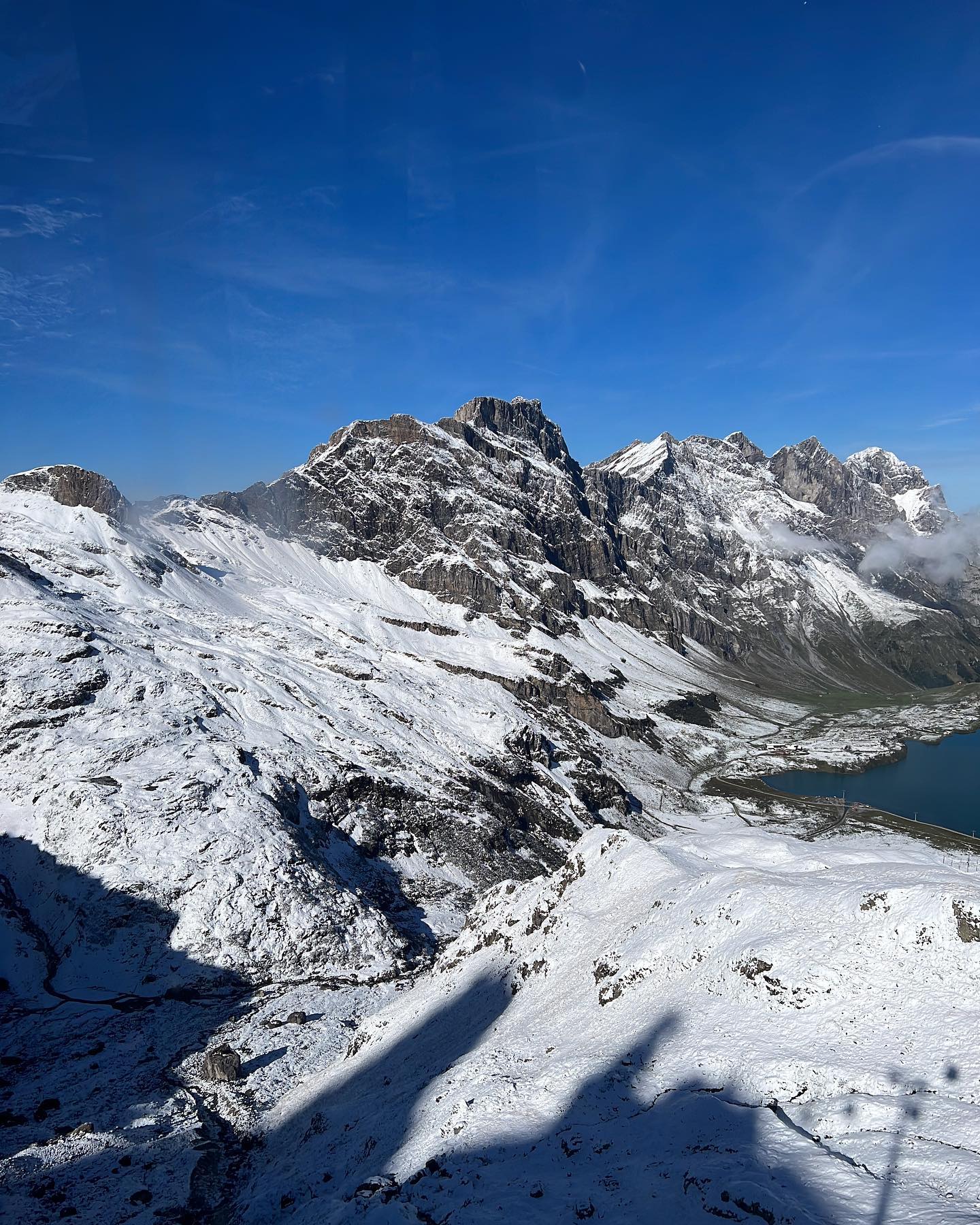
The Titlis massif consists of steep limestone faces and glacial ice. The summit reaches 3,238 meters, making it the highest peak north of the Susten Pass. The northern slope supports the Titlis Glacier, a massive but shrinking ice field that feeds the Engelberger Aa river. Deep crevasses score the glacier's surface. Passengers on the Ice Flyer chairlift sweep directly over these ten-meter-deep fissures, feeling the crisp alpine wind on their faces. The southern face is entirely different, presenting a sheer, rocky drop above the Wenden Glacier, while the eastern side overlooks the Firnalpeligletscher. The physical environment demands specific preparation. Visitors must wear sunglasses and high-SPF sunscreen to protect against intense UV radiation and snow glare.
Human engineering clings to this harsh environment. The Titlis Cliff Walk hangs 500 meters above the ground, anchored into solid rock at 3,041 meters. The one-meter-wide wire mesh floor allows visitors to look straight down into the abyss while the structure sways gently in the wind. Visitors can use the automated photo booth on the bridge by scanning their ticket and pushing a button, purchasing the print later for CHF 12. Nearby, the TITLIS Tower, designed by the renowned architecture firm Herzog & de Meuron, provides a stable observation platform called the Horizon Deck. Personal photography is free across these structures, but professional cameras and tripods are strictly prohibited on the summit.
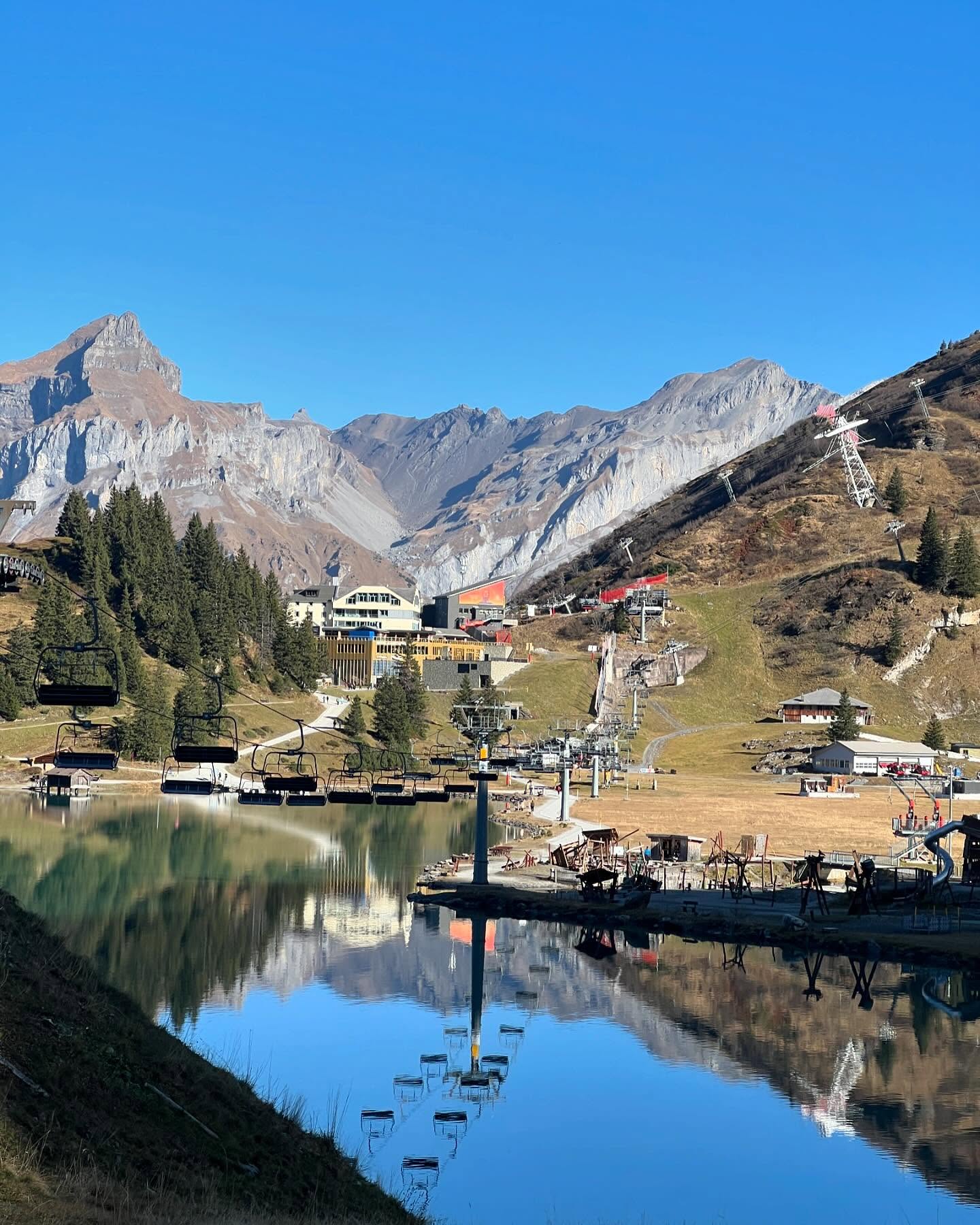
Below the summit station, the Trübsee Alpine Lake sits at 1,796 meters. This mid-station plateau offers a flat, obstacle-free trail around the water, making it highly manageable for elderly visitors. Tourists rent rowing boats here during the summer months, while children play at the adventure playground and Schmuggli's family paradise. Winter transforms the area into a snow park. Visitors grab snow tubes or sleds to slide down the slopes for free. The transition between the rocky summit and this grassy mid-station requires a descent via the 8-passenger Titlis Xpress gondola. From August 3, 2026, visitors can reserve a free boarding time online for the onward journey from Trübsee to TITLIS to avoid long queues.
Mount Titlis holds a distinct place in global cinema. The snow-capped peak served as a primary filming location for the 1995 Bollywood blockbuster "Dilwale Dulhania Le Jayenge." Millions of Indian tourists travel to Engelberg specifically to stand where actors Shah Rukh Khan and Kajol shot their scenes. The mountain features life-size cutouts of the actors at the summit, allowing fans to recreate famous movie moments against the alpine backdrop. Traditional Swiss costume photos can also be taken at the indoor studio for an extra fee.
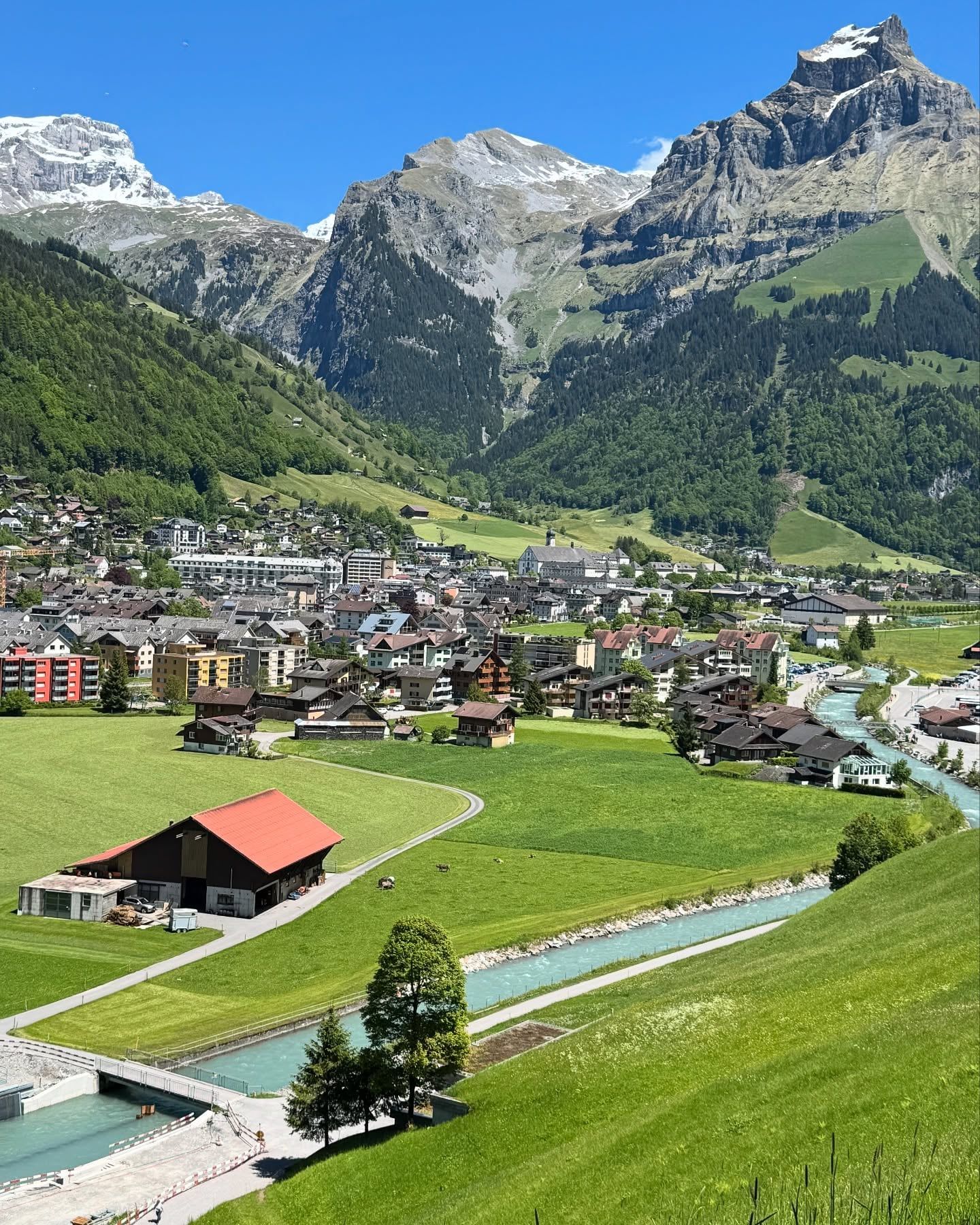
Locally, the mountain defines the economy and identity of Engelberg. The nearby Engelberg Benedictine Monastery, a 10-minute walk from the valley station, historically managed the land and resources. The monastery remains the proudest landmark of the village, featuring a collegiate church and a show-dairy where monks produce regional Swiss cheeses. The transition from a quiet monastic village to a high-volume tourist hub handling 1.2 million annual visitors required strict environmental regulations. The OW/NW Fire Department enforces a complete ban on fires and fireworks in the surrounding forests to protect the dry timber. Visitors must also keep their physical or digital admission tickets safely stored; failing to present a valid ticket or missing the 5:00 p.m. final descent cable car results in expensive penalties.
The mountain acts as a critical watershed boundary. Rain and snowmelt from the northern slopes flow into the Engelberger Aa, eventually joining the Aare river basin. The southern runoff feeds the Reuss river basin. Hikers track these water systems along the Four Lakes Hike, a full-day route starting from Jochpass. This trail connects four distinct alpine bodies of water, operating as a primary summer draw for outdoor enthusiasts.
The Titlis Rotair cabin rotates a full 360 degrees during the five-minute ascent from Stand station.
The Titlis Cliff Walk holds the record as Europe's highest suspension bridge at 3,041 meters.
The Glacier Cave cuts 150 meters deep into a 5,000-year-old ice field.
Temperatures inside the Glacier Cave remain at a constant -1.5 degrees Celsius all year.
The 1995 Indian hit film 'Dilwale Dulhania Le Jayenge' filmed major scenes on the summit.
The longest downhill ski run covers 12 kilometers and drops 2,000 meters in altitude.
The mountain separates the waters feeding the basins of the Aare and Reuss rivers.
No. Pass holders receive a 50% discount on the cable car journey from Engelberg to the summit, reducing the return ticket price to CHF 51. Lucerne Travel Pass holders ride for free.
The direct train from Lucerne to Engelberg takes 45 minutes. The cable car journey from the valley station to the summit adds another 30 minutes, making the total transit time 1 hour and 15 minutes.
The main gondolas, cable cars, and summit viewing terrace accommodate wheelchairs. Visitors should avoid the autumn 2026 maintenance window when escalators temporarily replace the main lifts.
Pack warm, windproof layers, a waterproof jacket, gloves, and a hat. Summit temperatures run 5 to 15 degrees Celsius colder than the valley, and the Glacier Cave requires sturdy, closed shoes.
Dogs can ride the cable cars. Animals with a shoulder height of 30 cm or more require a specific return ticket costing CHF 15.
A separate return ticket for the Ice Flyer costs CHF 12 per person. Small children are not permitted on this open-air ride due to safety risks.
The 100-meter suspension bridge is highly secure, but it sways over a 500-meter drop. Parents should assess their child's comfort with extreme heights before crossing.
During the scheduled maintenance from August 17 to December 11, 2026, the rotating cable car will not operate. Visitors will use the parallel Titlis Connect cable car to reach the summit.
Glaciologists expect the rapidly receding northern glacier to disappear in about twenty years due to global warming.
No special permits are required. Visitors simply purchase a return cable car ticket, and from August 2026, they can reserve a free boarding time online to skip queues at Trübsee.
Browse verified tours with free cancellation and instant confirmation.
Find Tours